

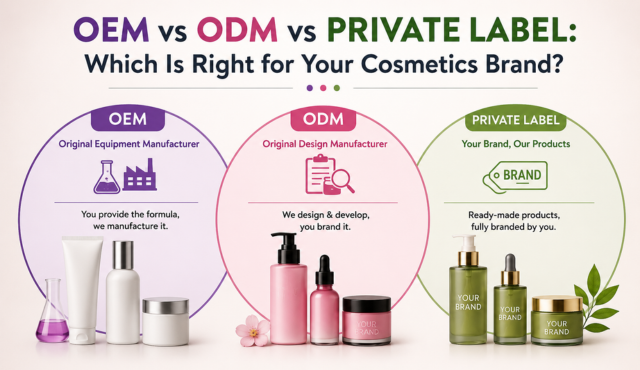
Choosing the right manufacturing model is one of the most important decisions when launching or scaling a cosmetics brand. Whether you’re creating a unique skincare formula, introducing a makeup line, or expanding an existing portfolio, understanding the difference between OEM (Original Equipment Manufacturer), ODM (Original Design Manufacturer), and Private Label manufacturing directly impacts your product quality, speed to market, costs, intellectual property, and long-term brand value.
The global cosmetics OEM & ODM market was valued at approximately USD 68 billion in 2025 and is projected to surpass USD 99 billion by 2031, reflecting the growing demand for outsourced beauty manufacturing and brand innovation.
In this expert guide, we’ll explain how each manufacturing model works, compare their advantages and limitations, and help you identify which option best aligns with your business goals, budget, customization needs, and growth strategy. Whether you’re a startup founder or an established beauty brand, this guide will help you make an informed manufacturing decision with confidence.
What is OEM in Cosmetics?
OEM (Original Equipment Manufacturer) in cosmetics refers to a manufacturing model where a brand provides its own product formulation, specifications, and packaging requirements, while the cosmetics manufacturer produces the product accordingly.
This option offers maximum customization, greater control over ingredients, quality, and intellectual property. OEM manufacturing is ideal for established beauty brands seeking unique formulations, premium positioning, and complete ownership of their cosmetic products and brand identity.
What is ODM in Cosmetics?
ODM (Original Design Manufacturer) in cosmetics is a manufacturing model where the manufacturer develops ready-made formulations and product concepts that brands can customize with their own packaging, branding, and minor modifications.
It offers a faster, more cost-effective route to market than OEM. ODM is ideal for startups and growing beauty brands that want high-quality products without investing heavily in research, development, and formulation testing.
What is Private Label Cosmetics Manufacturing?
Private label cosmetics manufacturing allows businesses to sell pre-formulated beauty and personal care products under their own brand name. The manufacturer handles product development, testing, production, and compliance, while the brand focuses on packaging, marketing, and sales.
This model requires minimal investment, enables quick market entry, and reduces development risks. Private label cosmetics manufacturing is ideal for startups, retailers, salons, influencers, and entrepreneurs looking to launch a cosmetics brand efficiently and affordably.
Which Manufacturing Model Is Right for Your Cosmetics Brand?
Selecting the right manufacturing model depends on your cosmetics business goals, available budget, target audience, timeline, and long-term branding strategy. There is no one-size-fits-all approach.
While startups often prioritize speed and affordability, established beauty brands usually focus on innovation, exclusivity, and product differentiation. Understanding where your business stands today—and where you want it to be in the future—will help you choose the most suitable manufacturing partner.
Choose OEM If:
OEM manufacturing is the best choice for brands that want complete control over product development and positioning.
- You want a unique formula: If your vision includes proprietary skincare or cosmetic formulations with exclusive ingredients, OEM allows you to create products that competitors cannot easily replicate.
- You have a larger budget: Custom formulation, laboratory testing, regulatory approvals, and product development require a higher investment, making OEM suitable for businesses with long-term growth plans.
- You aim to create a premium beauty brand: Luxury and high-end cosmetic brands often rely on OEM manufacturing to deliver exclusive products that strengthen brand identity and customer loyalty.
- You need complete product ownership: OEM gives you greater control over formulations, packaging specifications, intellectual property, and quality standards, helping build long-term brand value.
Choose ODM If:
ODM offers an excellent balance between customization, speed, and affordability.
- You want some customization: Brands can select proven formulations while making adjustments to fragrances, ingredients, textures, packaging, or branding to better match their market positioning.
- You need quicker product launches: Since research and product development are already completed, products can reach the market much faster than through OEM manufacturing.
- You want balanced investment and flexibility: ODM reduces development costs while still allowing enough customization to create a differentiated product portfolio.
This model is particularly suitable for growing beauty businesses that want to scale efficiently without investing heavily in research and development.
Choose Private Label If:
Private label manufacturing is designed for entrepreneurs seeking the fastest and most affordable way to enter the cosmetics industry.
- You are launching your first beauty brand: Ready-made, tested formulations eliminate the complexity of product development, allowing new businesses to focus on branding and sales.
- You have limited capital: With minimal research and development costs, private label significantly lowers the financial barrier to entry.
- You want to test market demand: Before investing in custom formulations, brands can validate customer preferences and identify best-selling products.
- You need a fast launch: Products can often be introduced within weeks, making private label ideal for retailers, influencers, salons, e-commerce businesses, and startups looking to capitalize on emerging beauty trends.
Ultimately, the best manufacturing model is the one that aligns with your current resources, business objectives, and future expansion plans. As your cosmetics brand grows, many successful companies transition from private label to ODM and eventually to OEM to achieve greater product differentiation, stronger intellectual property, and long-term competitive advantage.
Common Mistakes Cosmetic Brands Make When Choosing Manufacturing Models
Selecting the wrong manufacturing model can increase costs, delay product launches, and limit your brand’s growth. Avoid these common mistakes to build a stronger and more competitive cosmetics business.
a) Selecting Based Only on Price:
Choosing the cheapest manufacturer may compromise product quality, ingredient sourcing, packaging standards, and customer satisfaction. Consider overall value rather than just production costs.
b) Ignoring Future Growth Plans:
A manufacturing model that works for a startup may not support future expansion. Evaluate whether your manufacturing partner can scale production, introduce new product lines, and meet increasing demand.
c) Overlooking Product Differentiation:
Many brands struggle to stand out because they sell similar products. If your long-term goal is brand recognition and customer loyalty, choose a model that supports product customization and innovation.
d) Not Understanding MOQ Requirements:
Every manufacturer has Minimum Order Quantity (MOQ) requirements. Selecting a partner without understanding these limits can create inventory challenges or unnecessary financial pressure.
e) Skipping Compliance Checks:
Cosmetics must comply with regulations related to ingredient safety, labeling, GMP certification, and market-specific standards. Failing to verify compliance can result in product recalls, legal issues, and reputational damage.
f) Choosing an Inexperienced Manufacturer:
Manufacturing expertise directly affects formulation consistency, quality control, packaging accuracy, and delivery timelines. Always review certifications, production capabilities, quality assurance processes, client testimonials, and industry experience before signing a manufacturing agreement.
By evaluating manufacturers beyond price alone, you can choose a production model that supports sustainable growth, protects your brand reputation, and positions your cosmetics business for long-term success.
Conclusion:
A successful cosmetics brand is built on more than attractive packaging and effective marketing—it starts with choosing the right manufacturing partner and production model. Your decision today will influence product quality, customer trust, profitability, and your ability to scale in an increasingly competitive beauty market.
Whether you require fully customized formulations through OEM, faster product development with ODM, or a cost-effective Private Label solution, selecting the right approach ensures your brand is positioned for sustainable growth.
Reviera Overseas helps beauty entrepreneurs, startups, retailers, and established brands bring their vision to life with comprehensive OEM, ODM, and Private Label cosmetics manufacturing services. From innovative formulations and premium packaging to regulatory compliance and large-scale production, our experienced team supports you at every stage of your brand journey.
Ready to create a cosmetics brand that stands out? Partner with RevieraOverseas and turn your beauty concepts into high-quality, market-ready products backed by manufacturing expertise, consistent quality, and reliable end-to-end support.