

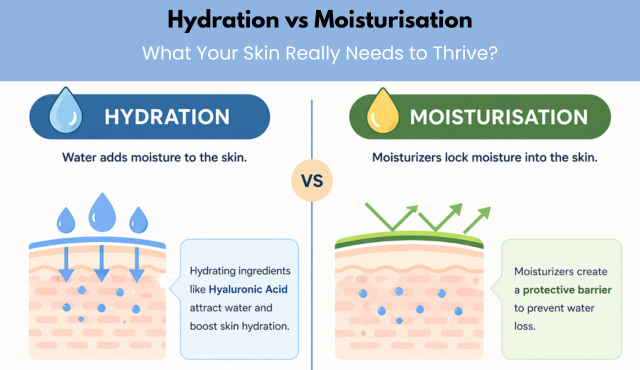
Glowing, healthy skin isn’t just about applying the right products—it’s about knowing what your skin truly needs. Hydration and moisturisation are often mistaken as the same, but they play very different roles in maintaining skin health. Hydration refers to boosting the water content in your skin, helping it stay plump, smooth, and radiant. Moisturisation, meanwhile, works to seal that hydration in, protecting the skin barrier and preventing dryness.
Here’s the catch—you can have oily skin and still be dehydrated, or use a heavy moisturiser and still feel tightness. Sounds familiar? That’s where most skincare routines go off track. As industry experts, we’ve seen how this simple confusion can impact results, no matter how premium the products are.
The real question is—does your skin need hydration, moisturisation, or a smart balance of both? Let’s simplify it so you can make better skincare choices every day.
What is Skin Hydration?
Skin hydration refers to the amount of water present in the skin, which keeps it soft, plump, and healthy-looking. Proper hydration helps improve skin elasticity, smooth texture, and natural glow. When your skin is well-hydrated, it appears fresh and radiant, while dehydrated skin can look dull, tight, and flaky. Ingredients like hyaluronic acid and glycerin are commonly used to boost hydration by attracting and retaining moisture within the skin layers, ensuring long-lasting skin health.
What is Moisturisation?
Moisturisation is the process of sealing and protecting the skin to prevent moisture loss and maintain a healthy barrier. It involves using creams, lotions, or oils that lock in hydration and keep the skin smooth, soft, and nourished. Unlike hydration, which adds water to the skin, moisturisation focuses on retaining it. Proper moisturisation helps reduce dryness, irritation, and flakiness, making the skin feel comfortable and resilient against environmental damage.
Hydration vs Moisturisation: Key Differences
When it comes to skincare, knowing the difference between hydration and moisturisation can completely change how your routine performs. Both are essential, but they serve different purposes and work best when used together.
– Hydration = Adds Water
Hydration focuses on increasing the water content in your skin. It helps your skin look plump, smooth, and fresh. Dehydrated skin often feels tight and looks dull, which is where hydrating products come into play.
– Moisturisation = Seals Water
Moisturisation helps lock in the hydration your skin already has. It forms a protective layer that prevents water loss and keeps your skin soft, nourished, and protected from environmental damage.
– Hydrating Products: Serums, Essences
Hydrating products are usually lightweight, like serums and essences. They contain ingredients such as hyaluronic acid that draw moisture into the skin for a healthy glow.
– Moisturising Products: Creams, Lotions
Moisturisers are richer in texture, including creams and lotions. They help seal in hydration and strengthen the skin barrier.
In a well-balanced skincare routine, hydration and moisturisation go hand in hand to keep your skin healthy and glowing.
How to Layer Hydration and Moisturisation Correctly
Getting the most out of your skincare routine isn’t just about the products you use—it’s about how you layer them. Applying hydration and moisturisation in the right order ensures your skin absorbs maximum benefits and stays healthy throughout the day.
1. Cleanser
Start with a gentle cleanser to remove dirt, oil, and impurities. Clean skin allows better absorption of hydrating and moisturising products.
2. Hydrating Toner/Serum
Next, apply a hydrating toner or serum. These lightweight formulas deliver water deep into the skin, helping it feel fresh, plump, and revitalised. Ingredients like hyaluronic acid work best at this stage.
3. Moisturiser
Follow up with a moisturiser to lock in the hydration. It creates a protective barrier that prevents moisture loss and keeps your skin soft and smooth for longer hours.
4. Sunscreen (Daytime)
In the morning, always finish with sunscreen. It protects your skin from harmful UV rays and prevents damage, making your hydration and moisturisation efforts more effective.
Layering correctly ensures your skin stays balanced, nourished, and glowing every day.
Best Ingredients for Hydration vs Moisturisation
Choosing the right ingredients can make a noticeable difference in how your skin looks and feels. While hydration and moisturisation work together, the ingredients behind them perform very specific roles. Knowing what to look for helps you build a smarter, more effective skincare routine.
a) Hydrating Ingredients
Hydrating ingredients focus on attracting and retaining water in the skin, making it appear plump, smooth, and refreshed.
– Hyaluronic Acid
A powerhouse ingredient known for holding up to 1000 times its weight in water. It deeply hydrates the skin, improves elasticity, and gives a naturally dewy look.
– Glycerin
A gentle yet effective humectant that draws moisture from the environment into the skin. It helps maintain hydration levels and keeps the skin soft and supple.
– Panthenol
Also known as provitamin B5, panthenol not only hydrates but also soothes and repairs the skin. It’s ideal for sensitive or irritated skin types.
b) Moisturising Ingredients
Moisturising ingredients help lock in hydration and strengthen the skin barrier, preventing water loss and dryness.
– Ceramides
Essential lipids that naturally exist in the skin. They help restore the skin barrier, retain moisture, and protect against environmental damage.
– Fatty Acids
These nourish the skin and improve its texture while reinforcing the natural barrier, making the skin feel smoother and healthier.
– Natural Oils
Ingredients like coconut oil, jojoba oil, and almond oil provide deep nourishment and seal in hydration, leaving the skin soft and well-protected.
When you combine the right hydrating and moisturising ingredients, your skincare routine becomes far more effective. Instead of choosing one over the other, focus on balance—this is what truly helps your skin stay healthy, resilient, and naturally glowing.
Conclusion:
Healthy, glowing skin isn’t about choosing between hydration and moisturisation—it’s about understanding how both work together. Hydration keeps your skin plump and refreshed by adding water, while moisturisation locks it in and protects your skin barrier. When balanced correctly, they create the foundation for smooth, radiant, and resilient skin.
If you’re planning to create skincare products that truly deliver results, partnering with experts can make all the difference. RevieraOverseas offers advanced formulations, private label solutions, and high-quality ingredients to help brands develop effective hydration and moisturisation-based skincare ranges.
The right combination of ingredients, layering, and product selection can transform your skin over time. Focus on what your skin really needs, and you’ll not only see better results but also build a routine that supports long-term skin health.