

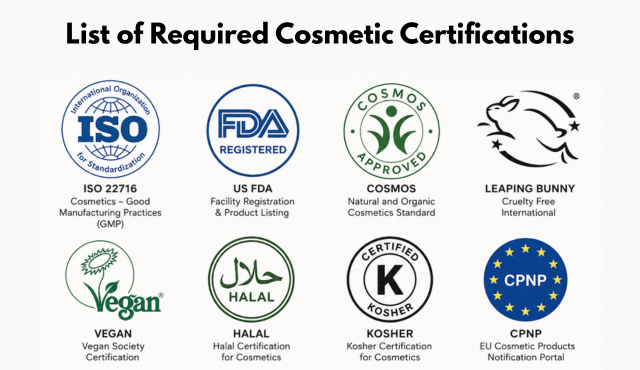
The beauty industry is evolving faster than ever, and in 2026, cosmetic certifications have become a major factor influencing consumer trust, retail approvals, global exports, and brand credibility. Recent market studies show that over 70% of beauty consumers actively check product safety claims, ingredient transparency, and certification labels before making a purchase.
As the global cosmetics market moves toward stricter compliance standards, certifications such as GMP, ISO 22716, FDA registration, ECOCERT, COSMOS, Halal, Vegan, Cruelty-Free, and Organic certifications are becoming essential rather than optional.
For skincare startups, private-label brands, and established beauty companies, understanding cosmetic certifications can unlock new market opportunities, simplify international expansion, and strengthen customer confidence. Whether you’re launching a skincare line, haircare range, makeup brand, or personal care products, knowing which certifications matter—and why—can help you stay compliant and competitive.
This guide explains the most important cosmetic certifications in 2026, their benefits, requirements, and business impact.
What Are Cosmetic Certifications?
Cosmetic certifications are official approvals or standards that verify a beauty or personal care product meets specific quality, safety, ethical, or manufacturing requirements. These certifications are issued by recognized organizations and regulatory bodies to ensure products comply with industry guidelines.
Common examples include GMP, ISO 22716, Vegan, Cruelty-Free, Organic, Halal, and ECOCERT certifications. For consumers, certifications build trust and confidence, while for brands, they enhance market credibility, support regulatory compliance, and create opportunities for expansion into domestic and international markets.
Major Changes in Cosmetic Certifications in 2026
The cosmetic industry is witnessing significant regulatory changes in 2026 as governments, certification bodies, and consumers demand greater transparency, sustainability, and product accountability.
a) Stricter Ingredient Disclosure Rules
Brands must provide more detailed information about ingredients, allergens, sourcing, and product formulations to improve consumer awareness.
b) Sustainability Compliance Growth
Environmental certifications are gaining importance, with greater focus on recyclable packaging, responsible sourcing, carbon reduction, and waste management practices.
c) Increased Digital Traceability Requirements
Many markets now require digital records, QR codes, and batch-level tracking systems that allow consumers and regulators to verify product origins and compliance status.
d) Clean Beauty Standards Becoming More Regulated
Terms such as “clean,” “natural,” and “non-toxic” are facing stricter definitions, reducing misleading claims and improving industry-wide transparency.
e) AI-Driven Compliance Systems Emerging
Artificial intelligence is helping manufacturers monitor regulations, assess ingredient compliance, automate documentation, and identify potential certification risks faster.
These developments are reshaping cosmetic certifications, making compliance a key factor for long-term brand growth and global market success.
Top Regulatory Certifications Required for Cosmetics Brands in India
As cosmetic brands expand beyond local markets, certifications have become essential for regulatory compliance, consumer trust, retail partnerships, and export opportunities. Here are the most important certifications beauty brands should know in 2026:
i) FDA Cosmetic Compliance (United States)
Required for brands selling cosmetics in the U.S., ensuring products meet FDA safety, labeling, and manufacturing requirements.
ii) EU Cosmetic Regulation (EC No.1223/2009)
A mandatory framework for cosmetics sold in Europe, covering ingredient safety, product testing, documentation, and responsible person requirements.
iii) ISO 22716 Certification
An internationally recognized Good Manufacturing Practices (GMP) standard that demonstrates quality-controlled cosmetic production processes.
iv) Cruelty-Free Certifications
Certifications such as Leaping Bunny verify that products and ingredients have not been tested on animals.
v) Vegan Cosmetic Certification
Confirms that products contain no animal-derived ingredients and align with growing ethical beauty preferences.
vi) Organic Cosmetic Certifications
Standards like COSMOS and ECOCERT validate the use of organically sourced ingredients and environmentally responsible production methods.
vii) Halal Cosmetic Certification
Ensures products comply with Islamic requirements regarding ingredients, manufacturing processes, and handling practices.
viii) Dermatologically Tested Certification
Indicates that a product has undergone skin compatibility testing under professional supervision, enhancing consumer confidence.
ix) EWG Verified Certification
Awarded to products that meet strict ingredient transparency and safety standards established by the Environmental Working Group.
x) Sustainability Certifications
These certifications assess eco-friendly packaging, responsible sourcing, waste reduction, carbon footprint management, and broader environmental commitments.
For Indian skincare, haircare, makeup, and personal care brands, obtaining the right certifications can strengthen market positioning, improve customer trust, simplify international expansion, and increase acceptance among retailers, distributors, e-commerce platforms, and global consumers seeking safe, ethical, and compliant beauty products.
Cosmetic Regulations Across Global Markets
Cosmetic regulations vary across global markets, making certification and compliance essential for brands planning international expansion. Understanding regional requirements helps avoid legal issues and improves market access.
1. Cosmetic Certifications in USA
i) FDA Requirements
Cosmetics sold in the United States must comply with FDA regulations regarding product safety, ingredient usage, manufacturing practices, and labeling accuracy.
ii) MoCRA Updates
The Modernization of Cosmetics Regulation Act (MoCRA) has introduced stricter requirements, including facility registration, product listing, adverse event reporting, and enhanced safety documentation.
iii) Label Compliance
Brands must ensure labels accurately display ingredients, warnings, net quantity, manufacturer details, and product claims to avoid regulatory action.
2. Cosmetic Certifications in Europe
i) EU Standards
The European Union follows Regulation (EC) No. 1223/2009, one of the world’s strictest cosmetic frameworks, covering safety, product information files, and restricted ingredients.
ii) Safety Assessment Rules
Every cosmetic product requires a detailed safety assessment conducted by a qualified expert before entering the European market.
3. Cosmetic Certifications in Middle East
i) GCC Requirements
Countries within the Gulf Cooperation Council (GCC) require compliance with regional standards related to product safety, documentation, labeling, and ingredient restrictions.
ii) Halal Regulations
Many Middle Eastern consumers prefer certified Halal cosmetics, making Halal certification an important competitive advantage for beauty brands operating in the region.
4. Cosmetic Certifications in Australia
i) TGA Considerations
While most cosmetics are regulated differently from therapeutic goods, products making therapeutic claims may fall under the Therapeutic Goods Administration (TGA) framework.
ii) Import Compliance
Imported cosmetic products must comply with Australian ingredient regulations, labeling standards, and chemical safety requirements before being sold in the market.
Meeting these regional certification requirements helps cosmetic brands expand globally while building trust, compliance, and long-term business growth.
Step-by-Step Process to Get Cosmetic Certifications
Obtaining cosmetic certifications requires a structured process to ensure products meet safety, quality, and regulatory standards. Here is a step-by-step overview:
Step 1: Understand Product Category
Identify whether your product falls under skincare, haircare, makeup, personal care, organic, vegan, or therapeutic categories. Different certifications have different requirements.
Step 2: Review Ingredients
Carefully assess all ingredients to ensure they comply with the regulations and certification standards of your target market. Restricted or prohibited ingredients must be removed.
Step 3: Product Testing
Conduct necessary laboratory testing for safety, stability, microbial quality, skin compatibility, and product performance. Testing requirements vary depending on the certification.
Step 4: Prepare Documentation
Compile essential documents, including ingredient lists, formulations, manufacturing records, safety assessments, test reports, and product specifications.
Step 5: Select Certification Body
Choose a recognized certification organization that aligns with your business goals, such as ISO, ECOCERT, Halal, Vegan, Cruelty-Free, or other regulatory authorities.
Step 6: Factory Audit and Approval
Many certifications require an inspection of manufacturing facilities to verify compliance with quality control, hygiene, documentation, and Good Manufacturing Practices (GMP).
Following these steps helps cosmetic brands streamline certification approvals, improve product credibility, meet international regulations, and build stronger consumer trust in competitive beauty markets.
Certification Challenges Facing Beauty Brands in 2026
As cosmetic regulations become more stringent worldwide, beauty brands are facing several certification challenges in 2026.
a) Rapidly Changing Global Rules
Regulatory requirements are evolving quickly across regions, making it difficult for brands to stay compliant in multiple markets simultaneously.
b) Cost of Multiple Certifications
Obtaining certifications such as ISO, Organic, Vegan, Halal, and Cruelty-Free often requires significant investments in testing, audits, documentation, and renewals.
c) Supply Chain Transparency Issues
Brands must track ingredients, suppliers, and manufacturing processes more closely, which can be challenging when sourcing materials from multiple countries.
d) Sustainable Ingredient Verification Challenges
Verifying eco-friendly claims and proving the sustainability of raw materials requires extensive documentation and third-party validation.
e) Complex Export Requirements
Different countries have unique regulations, labeling standards, and product registration procedures, creating additional compliance hurdles for exporters.
Successfully addressing these challenges helps beauty brands maintain certifications, build consumer trust, reduce regulatory risks, and expand confidently into global markets.
How Reviera Overseas Helps Brands Build Certified Cosmetic Products?
As global cosmetic regulations become more complex, partnering with an experienced cosmetics manufacturing company can simplify the certification journey. Reviera Overseas helps beauty entrepreneurs, startups, and established brands develop compliant, market-ready cosmetic products.
i) End-to-End Private Label Support
From concept creation and formulation to packaging and production, the company provides complete private-label manufacturing solutions.
ii) Manufacturing Compliance
Products are developed under strict quality control processes designed to align with industry standards and regulatory requirements.
iii) Product Development Assistance
The team supports brands in creating customized skincare, haircare, personal care, and cosmetic formulations tailored to target markets.
iv) Certification Guidance
Reviera Overseas assists cosmetics businesses in understanding certification requirements related to GMP, ISO standards, Vegan, Organic, Halal, and other market-specific approvals.
v) Export Support
Brands looking to enter international markets receive guidance on documentation, labeling requirements, regulatory compliance, and export procedures.
With a focus on quality, compliance, and innovation, Reviera Overseas helps brands launch certified cosmetic products that build consumer trust and compete successfully in domestic and global markets.
Conclusion:
Cosmetic certifications are no longer just regulatory requirements—they have become powerful trust signals that influence consumer purchasing decisions, retailer acceptance, and global market expansion.
As beauty regulations continue to evolve in 2026, brands that prioritize compliance, ingredient transparency, sustainability, and product safety will be better positioned for long-term success. Whether you are launching a skincare startup, expanding a personal care line, or entering international markets, understanding the right certifications can help reduce risks and strengthen brand credibility.
If you’re looking to develop certified, high-quality cosmetic products, Reviera Overseas can help transform your ideas into market-ready solutions. From product formulation and private label manufacturing to compliance support and export guidance, their team assists brands at every stage of growth.
The future of beauty belongs to brands that combine innovation with regulatory excellence. Investing in the right cosmetic certifications today can open new opportunities, increase consumer confidence, and create a stronger foundation for sustainable business growth tomorrow.