

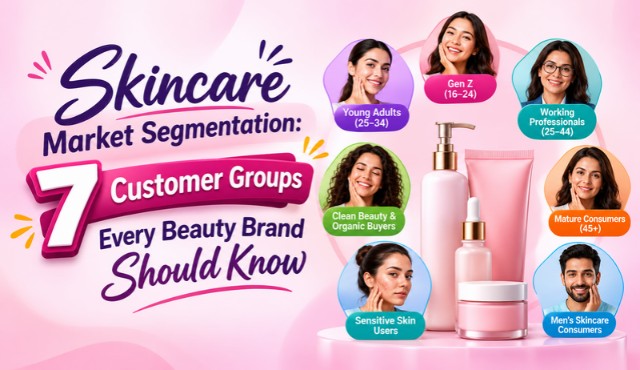
Skincare market segmentation helps beauty brands understand why different customers buy, which skin concerns they prioritise and what products earn their trust. India’s skincare market was valued at approximately USD 3.16 billion in 2025 and is projected to reach USD 6.58 billion by 2035, highlighting significant opportunities for brands that understand evolving consumer needs.
Growth, however, is not driven by one uniform audience. Gen Z shoppers may seek affordable, ingredient-led routines, while mature consumers often prioritise anti-ageing, hydration and clinically supported results. Sensitive-skin buyers look for gentle formulations, whereas sustainability-conscious customers value transparent ingredients and responsible packaging.
These differences make customer segmentation essential for skincare product development, pricing, positioning and marketing. So, who are the most important skincare customer groups? This guide examines seven segments, their buying behaviours, expectations and product preferences, helping beauty businesses develop sharper customer personas, create relevant brand messaging and identify growth opportunities in India’s competitive beauty market.
Why Do Skincare Brands Need to Understand Their Target Market?
Understanding the target market allows skincare brands to develop products that address specific consumer needs rather than relying on generic beauty solutions. Different customer groups have different priorities, from acne control and pigmentation to anti-ageing, hydration and sensitive-skin care.
These preferences influence product formulation, ingredient selection, packaging design, pricing and brand positioning. For example, Gen Z consumers may respond to affordable, visually appealing products, while premium skincare buyers often prioritise ingredient transparency and proven results.
Market segmentation also helps beauty businesses create focused marketing campaigns, improve customer retention and identify emerging product opportunities. A clear understanding of customer behaviour ultimately supports stronger brand differentiation and sustainable business growth.
7 Skincare Customer Segments Every Beauty Brand Should Know
The skincare industry caters to consumers with different lifestyles, skin concerns, spending capacities and product expectations. For beauty brands, identifying these customer groups is essential for developing relevant product formulations, effective packaging designs and marketing strategies. The following seven skincare customer segments represent important opportunities for businesses looking to strengthen their market positioning.
1. Gen Z and Young Skincare Explorers
Gen Z consumers gravitate towards affordable skincare, trending ingredients, attractive packaging and social media recommendations. They frequently explore niacinamide, salicylic acid and hyaluronic acid-based products.
2. Acne-Prone and Problem-Solution Skincare Buyers
These consumers actively seek solutions for acne, blemishes, pigmentation and excess oil. They prefer targeted formulations, transparent ingredient information and products with credible results.
3. Sensitive-Skin and Skin-Barrier-Conscious Consumers
Gentle, fragrance-free and dermatologist-tested formulations appeal to this group. They prioritise skin-barrier protection, simple ingredients and reassuring product claims.
4. Anti-Ageing and Healthy-Ageing Skincare Consumers
Fine lines, wrinkles, uneven skin tone and firmness are their primary concerns. Retinol, peptides, vitamin C and ceramides attract buyers seeking advanced skincare solutions.
5. Ingredient-Conscious and Science-Led Skincare Shoppers
These research-oriented customers examine ingredient lists, formulation benefits and clinical evidence. Science-backed positioning and transparent communication help establish brand credibility.
6. Natural, Organic, and Sustainability-Minded Skincare Consumers
Plant-based ingredients, cruelty-free formulations, recyclable containers and refillable packaging appeal to environmentally conscious buyers. Authentic sustainability claims influence their purchasing decisions.
7. Premium, Luxury, and Experience-Driven Skincare Buyers
This segment values sophisticated formulations, exclusive ingredients and elevated product experiences. Premium packaging, elegant visual identity and distinctive brand storytelling help communicate quality and justify higher price positioning.
For skincare businesses, these seven segments offer a foundation for smarter product development, targeted branding, packaging innovation and customer-focused marketing.
How to Identify the Right Skincare Market Segment for Your Brand
A successful skincare brand needs more than a good formulation; it needs a clearly defined audience. Identifying the right market segment helps businesses align product development, pricing, packaging and marketing with actual customer expectations.
Step 1. Research Your Ideal Skincare Customers
Study customer demographics, age groups, lifestyles, purchasing habits and skincare preferences through surveys, reviews and market research.
Step 2. Identify Customer Needs and Unmet Market Gaps
Examine common skin concerns, product complaints and emerging ingredient preferences to identify opportunities for differentiated skincare products.
Step 3. Evaluate Segment Size, Competition, and Profitability
Assess market demand, competitor positioning, pricing trends and potential profit margins before entering a segment.
Step 4. Create a Skincare Customer Persona
Develop a detailed buyer profile covering customer motivations, concerns, budget and preferred shopping channels.
A well-defined customer segment gives skincare brands a stronger foundation for product positioning, distinctive packaging and long-term market growth.
Conclusion:
Skincare market segmentation helps beauty brands connect with the right customers, develop relevant products, and create marketing campaigns that resonate with specific consumer needs. From sensitive skin users and anti-ageing enthusiasts to Gen Z buyers and premium skincare consumers, each segment offers unique opportunities for brand growth. Understanding these groups allows businesses to make smarter decisions about product formulations, pricing, packaging, positioning, and promotional strategies.
For emerging beauty businesses, identifying the right audience is only the beginning. Partnering with an experienced cosmetics manufacturer can simplify product development and bring ideas to market efficiently. RevieraOverseas supports skincare startups and established brands with private label cosmetics manufacturing, customised formulations, and packaging solutions.
A clearly defined target market, combined with quality products and consistent branding, can help your skincare business build customer trust, strengthen market presence, and achieve sustainable growth in India’s competitive beauty industry.