

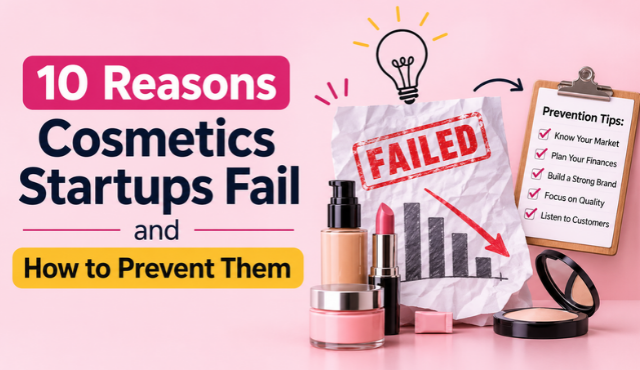
Launching a cosmetics brand involves more than developing attractive products and investing in premium packaging. Many cosmetics startups fail because of weak market research, incorrect pricing, poor product positioning, regulatory non-compliance, and ineffective marketing strategies.
According to a recent CB Insights analysis of 431 failed VC-backed companies, 43% cited poor product-market fit, while 70% ran out of capital, highlighting the importance of sustainable business planning.
In India’s competitive beauty and personal care industry, new entrepreneurs must carefully evaluate product formulation, ingredient quality, BIS and CDSCO requirements, third-party cosmetics manufacturing, brand identity, distribution, and customer acquisition. Even a promising skincare or haircare product can struggle without the right manufacturer, pricing strategy, and market positioning.
So, why do cosmetics startups fail, and what can entrepreneurs do differently? This guide examines 10 common cosmetics business mistakes and practical ways to prevent them, helping founders build a profitable, compliant, and scalable cosmetics brand.
Why Do So Many Cosmetics Startups Fail?
The cosmetics industry offers significant opportunities, but entering a competitive beauty market without a well-defined business strategy can quickly drain resources. Many cosmetics startups fail not because their products lack potential, but because founders overlook critical aspects of product development, manufacturing, branding, financial planning, and customer retention. Here are 10 common reasons behind cosmetics business failures and how entrepreneurs can avoid them.
Reason 1: Starting Without Proper Market Research
Launching a cosmetics brand without understanding market demand, competitor pricing, consumer preferences, and emerging beauty trends is a costly mistake. Entrepreneurs should research product categories, analyse competing brands, identify market gaps, and validate demand before investing in manufacturing.
Reason 2: Targeting Everyone Instead of a Specific Audience
A skincare brand targeting everyone often struggles to connect with anyone. Define your ideal customers based on age groups, skin concerns, purchasing power, lifestyle, and preferences. A focused audience makes product development and marketing more effective.
Reason 3: Launching Products Without Differentiation
Generic formulations and similar product claims make it difficult to stand out. Develop a clear USP through specialised formulations, innovative ingredients, sustainable positioning, or solutions for specific skin and hair concerns.
Reason 4: Choosing the Wrong Cosmetics Manufacturer
An unreliable third-party cosmetics manufacturer can create problems with product consistency, delivery timelines, formulation quality, and minimum order quantities (MOQs). Evaluate manufacturing capabilities, certifications, quality-control processes, and scalability before signing an agreement.
Reason 5: Underestimating Startup Costs and Cash Flow
Product development, testing, packaging, manufacturing, marketing, logistics, and regulatory approvals require adequate capital. Prepare a realistic financial plan that accounts for initial investment, operating expenses, and working capital.
Reason 6: Neglecting Product Quality, Safety, and Regulatory Compliance
Inadequate testing, incorrect labelling, and regulatory violations can damage customer trust and create legal complications. Follow applicable CDSCO requirements, quality standards, and product safety protocols.
Reason 7: Poor Branding and Packaging Design
Unprofessional branding and generic packaging can reduce shelf appeal and weaken brand credibility. Invest in strategic brand identity, attractive packaging design, clear product information, and consistent visual communication.
Reason 8: Relying on Ineffective Marketing and Expensive Customer Acquisition
Without a defined marketing strategy, advertising expenses can increase without generating profitable sales. Combine SEO, social media, influencer partnerships, content marketing, and performance advertising.
Reason 9: Ignoring Customer Feedback and Repeat Purchases
Customer reviews reveal product weaknesses and improvement opportunities. Monitor feedback, address complaints, and introduce loyalty programmes to encourage repeat purchases.
Reason 10: Expanding Too Quickly Before the Business Is Ready
Launching too many products or entering multiple markets before establishing stable demand can strain finances and operations. Scale gradually after validating product performance, profitability, and supply-chain capacity.
Successful cosmetics businesses are built on informed decisions, reliable manufacturing, strong branding, consistent product quality, and customer trust. Addressing these challenges early helps founders create sustainable beauty brands.
Practical Checklist: How to Build a Successful Cosmetics Startup?
Building a successful cosmetics startup requires more than an attractive product idea. Entrepreneurs need a structured approach covering market validation, product development, manufacturing, regulatory compliance, branding, and sales. Use this practical checklist to establish a strong foundation for your cosmetics business:
Research the Market and Validate Demand: Analyse industry trends, competitor offerings, customer preferences, and pricing. Conduct surveys and evaluate search demand to identify products with genuine market potential before investing in manufacturing.
Define Your Target Audience and Brand Positioning: Identify your ideal customers based on demographics, skin concerns, purchasing behaviour, and budget. Establish a clear brand identity that communicates your value proposition.
Develop a Differentiated Product Proposition: Offer something distinctive through specialised formulations, innovative ingredients, unique product benefits, or sustainable packaging. Give customers a compelling reason to choose your products over established competitors.
Select a Reliable Cosmetics Manufacturing Partner: Evaluate third-party cosmetics manufacturers based on licensing, production capabilities, formulation expertise, quality-control systems, MOQ, and delivery commitments.
Calculate Startup Costs and Cash Flow: Prepare a financial plan covering product development, raw materials, packaging, manufacturing, marketing, logistics, and working capital. Calculate profit margins before finalising product prices.
Complete Product Testing and Regulatory Checks: Ensure formulations meet applicable safety and quality requirements. Verify manufacturing licences, product approvals where applicable, ingredient declarations, and labelling compliance.
Develop Consistent Branding and Functional Packaging: Invest in professional logo design, brand identity, product labels, and packaging design that communicate quality while meeting regulatory requirements.
Create a Measurable Marketing Strategy: Combine SEO, social media marketing, influencer collaborations, paid advertising, and content marketing. Track customer acquisition costs, conversions, and return on investment.
Establish Customer Feedback and Retention Processes: Collect reviews, address complaints, monitor satisfaction, and introduce loyalty programmes to encourage repeat purchases.
Scale According to Validated Demand: Expand product ranges, manufacturing volumes, and distribution channels only after establishing consistent sales, operational efficiency, and sustainable profitability.
Following these steps helps cosmetics entrepreneurs minimise business risks, build customer confidence, manage investments wisely, and create a competitive, profitable, and scalable beauty brand.
How Can a Cosmetics Manufacturing Partner Help Prevent Startup Failure?
A reliable cosmetics manufacturing partner can significantly reduce the risks associated with launching a new beauty brand.
Experienced third-party cosmetics manufacturers provide formulation development, ingredient sourcing, product testing, quality control, regulatory guidance, and scalable production facilities.
They also help startups manage manufacturing costs, minimum order quantities (MOQs), and production timelines. Working with the right private label cosmetics manufacturer allows entrepreneurs to focus on branding, marketing, distribution, and customer acquisition while maintaining consistent product quality and building a sustainable cosmetics business.
Conclusion:
Building a successful cosmetics brand requires more than an innovative product or attractive packaging. From market research and product differentiation to regulatory compliance, manufacturing, and customer retention, every business decision influences long-term success. Most cosmetics startup failures can be prevented through proper planning, realistic financial management, consistent product quality, and a clearly defined brand strategy.
Choosing the right manufacturing partner is equally important. RevieraOverseas, an experienced cosmetics manufacturer in India, supports emerging and established beauty businesses with third-party cosmetics manufacturing, private label solutions, and product development expertise. Whether you are planning to launch a skincare, haircare, or beauty brand, partnering with the right manufacturer can simplify operations and strengthen your market entry.
Ultimately, successful cosmetics brands are built on customer trust, product innovation, and consistent execution. Plan strategically, invest wisely, and focus on creating products that customers genuinely want to buy again.