

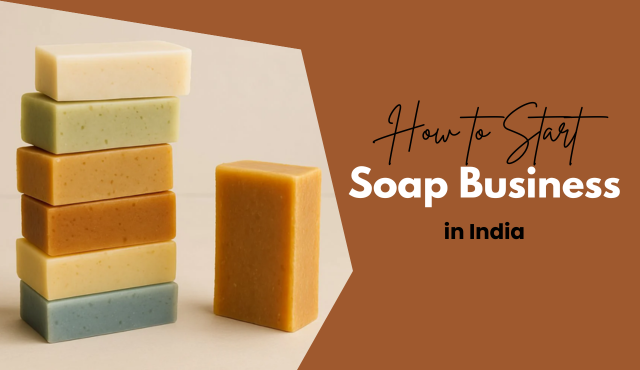
India’s soap market is far more dynamic than it appears on the surface. Behind everyday bars lies a multi-layered industry driven by shifting consumer preferences, rising demand for herbal formulations, and a growing inclination toward premium and niche personal care products. From traditional bathing soaps to medicated, organic, and artisanal variants, the category offers wide entry points for new entrepreneurs—but success depends on understanding far more than just production.
Starting a soap business today involves navigating raw material sourcing, compliance with BIS and cosmetic regulations, branding strategy, and choosing between contract manufacturing or in-house setup. Regional demand patterns, pricing psychology, and packaging also play a decisive role in market acceptance.
This guide breaks down the practical realities—cost structures, machinery choices, licensing, and go-to-market strategies—so you can move beyond theory and build a soap brand that is not only compliant but also commercially viable in India’s highly competitive FMCG landscape.
Why is Soap Business a Smart Opportunity in India?
Soap operates in a rare category where volume, habit, and trust intersect. Consumption is not just frequent—it is predictable, which allows better demand forecasting and inventory planning even for small manufacturers. What makes the opportunity sharper today is the fragmentation of the market. Large FMCG brands dominate mass segments, but they move slowly when it comes to niche innovations like sulphate-free bases, cold-processed artisanal bars, or problem-solution soaps (anti-acne, anti-fungal, baby-safe).
Distribution has also evolved. Earlier, shelf space was the biggest barrier; now, D2C websites and marketplaces reduce dependency on traditional retail margins. On the backend, contract manufacturing clusters in regions like Baddi and Gujarat have lowered entry barriers by offering compliant production without heavy capex.
When formulation, storytelling, and packaging align with a clearly defined audience, even a small soap brand can scale efficiently in this high-frequency category.
Types of Soap Businesses
The soap industry offers multiple entry routes, each with different investment levels, scalability, and brand positioning. Choosing the right type depends on your budget, target audience, and long-term vision.
a) Handmade Soap Business
This model focuses on small-batch production using techniques like cold process or melt-and-pour. It requires low initial investment and allows high creativity in ingredients, fragrances, and design. Ideal for selling through Instagram, exhibitions, and niche marketplaces, it appeals to customers looking for artisanal and skin-friendly products.
b) Commercial Manufacturing
Here, soaps are produced at scale using automated machinery. It involves higher investment in plant setup, raw material sourcing, and compliance. This model targets mass markets, including wholesalers, retailers, and institutional buyers, where pricing, consistency, and volume matter most.
c) Private Label Soap Production
In this approach, you outsource manufacturing to a third-party unit while focusing on branding and sales. It reduces operational complexity and speeds up market entry. Many startups prefer this model to test products without heavy capital investment.
d) Organic/Herbal Niche Brands
This segment caters to conscious consumers seeking chemical-free, ayurvedic, or eco-friendly soaps. It relies heavily on ingredient transparency, storytelling, and premium packaging, often allowing higher profit margins despite lower volumes.
Step-by-Step Process to Start Soap Business in India
Starting a soap business requires a structured approach where every step directly impacts your product’s success and scalability.
a) Market Research
Begin by identifying gaps rather than following trends blindly. Study pricing bands, ingredient positioning (herbal, medicated, luxury), and competitor packaging. Understanding who you are selling to—mass, premium, or problem-solution buyers—will define your entire strategy.
b) Business Plan Creation
Outline your cost structure, including raw materials, manufacturing, packaging, logistics, and marketing. A clear projection of margins and break-even timeline helps avoid underpricing or over-investing in the early stages.
c) Choose Business Model
Decide whether you want to manufacture in-house, go for third-party production, or start small with handmade soaps. Each model has different capital requirements, operational complexity, and scalability potential.
d) Legal Requirements & Registration
Soap falls under the cosmetic category, so compliance is non-negotiable. Obtain necessary registrations, follow BIS standards where applicable, and ensure proper labeling as per regulatory guidelines to avoid future legal issues.
e) Hiring Private Label Soap Manufacturer
Selecting the right manufacturing partner can save both time and capital. Evaluate their formulation capabilities, quality certifications, minimum order quantities, and ability to customise products based on your brand vision.
f) Branding & Packaging Strategy
In a crowded market, packaging often drives first purchase. Focus on clear communication of benefits, ingredient transparency, and a design that aligns with your target audience. Strong branding not only builds trust but also justifies pricing and encourages repeat sales.
What is the Profit Margin in Soap Business?
Profit margins in the soap business can vary widely depending on your positioning, production model, and distribution channel. On average, handmade and premium soaps can offer margins ranging from 40% to 60%, while mass-market soaps usually operate between 15% to 30% due to competitive pricing and higher volumes.
If you partner with a Cosmetics Manufacturer for private label production, your margins depend on order quantity, formulation cost, and packaging choices. Bulk production often reduces per-unit cost, improving profitability over time. Premium ingredients, customised fragrances, and eco-friendly packaging may increase initial costs but allow higher selling prices.
Direct-to-consumer (D2C) models typically yield better margins compared to retail distribution, where margins are shared with distributors and retailers. With the right pricing strategy and brand positioning, the soap business can deliver stable and scalable profits.
Conclusion:
Building a successful soap business today goes far beyond just creating a good product. It requires a clear understanding of market demand, smart positioning, compliance awareness, and a strong focus on branding that connects with your target audience. Whether you choose handmade production or scale through private label manufacturing, every decision—from formulation to packaging—directly impacts your growth.
If you are looking to simplify the journey, partnering with an experienced manufacturer like RevieraOverseas can give you a strong head start. From customised formulations to end-to-end private label solutions, they help transform your idea into a market-ready product with ease.
With the right strategy, consistent quality, and a clear brand story, the soap business can evolve into a profitable and sustainable venture in India’s ever-growing personal care market.